A diverse modern US elementary classroom with students reading books at desks, working at Chromebooks, and meeting in a small reading group with the teacher — a science-of-reading-aligned reading block in action.

What Is the Science of Reading? A Guide for Educators

The science of reading is the research base for how students learn to read. Learn the five pillars, the Simple View of Reading, and how it differs from balanced literacy.


Find out more about
Science of Reading
Will Jackson, CEO
June 9, 2026
, last updated on
June 9, 2026
,
5
min read

The science of reading is the body of research, drawn from cognitive science, linguistics, and education, that explains how students learn to read and which instructional approaches work best. It is not a program or a curriculum. This guide explains what the science of reading is, the frameworks behind it, and how it differs from older approaches.

What Is the Science of Reading?

The science of reading is decades of interdisciplinary research showing that most students learn to read most reliably through explicit, systematic instruction. It points to five core skills and to teaching them directly rather than leaving them to incidental discovery. It is an evidence base, not a single method or product.

For a fuller overview of how this research translates into classroom practice, see our science of reading pillar page.

The Five Pillars of Reading

In 2000, the National Reading Panel identified five components of effective reading instruction: phonemic awareness, phonics, fluency, vocabulary, and comprehension. The first two build word recognition, the last two build meaning, and fluency bridges them.

The panel concluded these skills are taught most reliably through explicit, systematic instruction, and they remain the backbone of science-of-reading-aligned teaching.

The Simple View of Reading

The Simple View of Reading states that reading comprehension is the product of decoding and language comprehension. A student needs both: the ability to read words accurately and the language knowledge to understand them. If either is weak, comprehension breaks down.

This framework, along with Scarborough Reading Rope, explains why instruction has to develop word recognition and language comprehension together rather than focusing on one alone.

Science of Reading vs Balanced Literacy

The clearest contrast is with balanced literacy. Balanced literacy often teaches phonics incidentally and encourages students to guess unfamiliar words from context or pictures. The science of reading instead calls for explicit, systematic phonics and decoding instruction. The stakes are real: on the National Assessment of Educational Progress, only about a third of U.S. fourth graders read at or above the proficient level.

How Mote Fits a Science-of-Reading Classroom

Mote is an accessibility and practice layer, not a phonics program. Its Read Aloud models fluent reading and gives developing readers access to grade-level text, while its dictionary and vocabulary tools support the language-comprehension side of reading. Teachers keep leading the explicit instruction at the heart of the science of reading, and Mote scaffolds access and practice alongside it.

The Bottom Line

The science of reading is an evidence base, not a brand. It points to explicit instruction in five pillars and to developing word recognition and language comprehension together. Choose curricula and tools that align with that research. Mote can support access and practice, but the explicit instruction you provide is what teaches students to read.
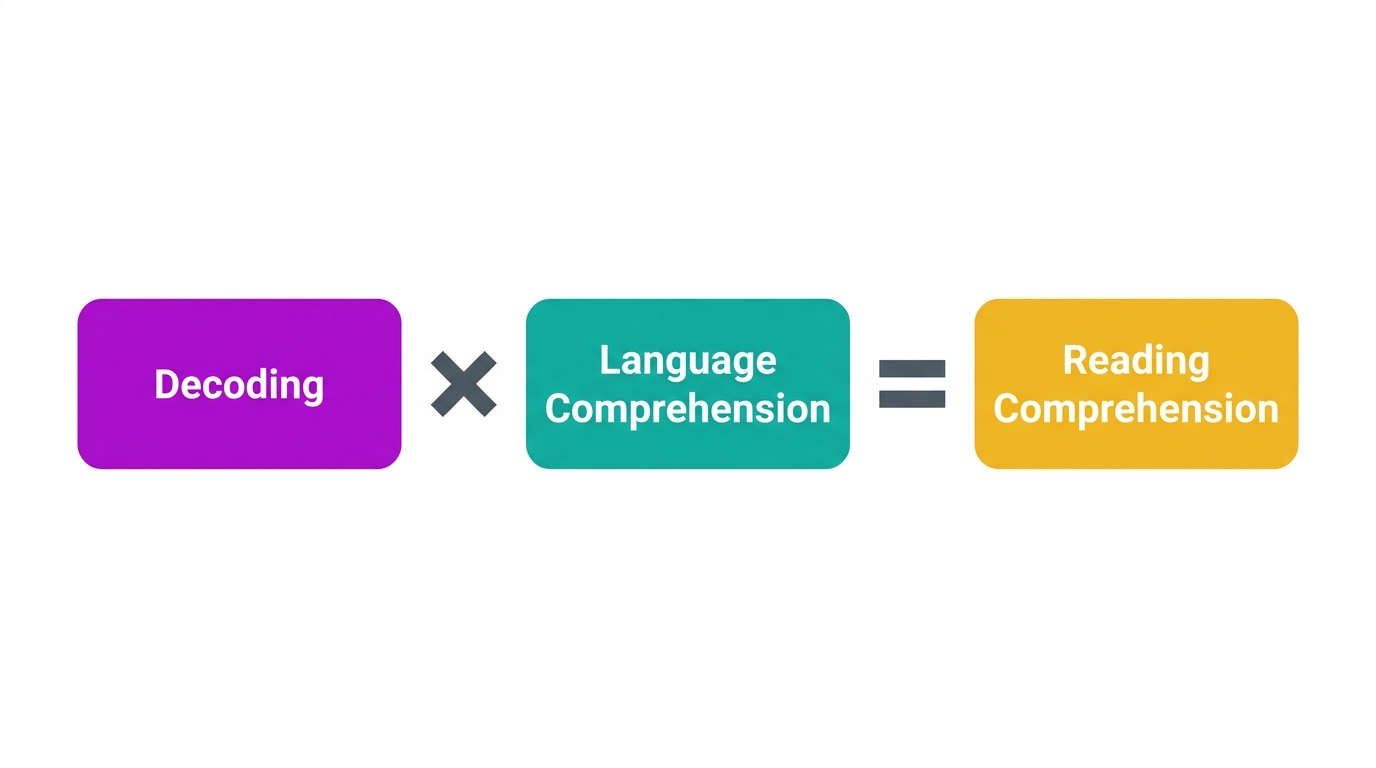
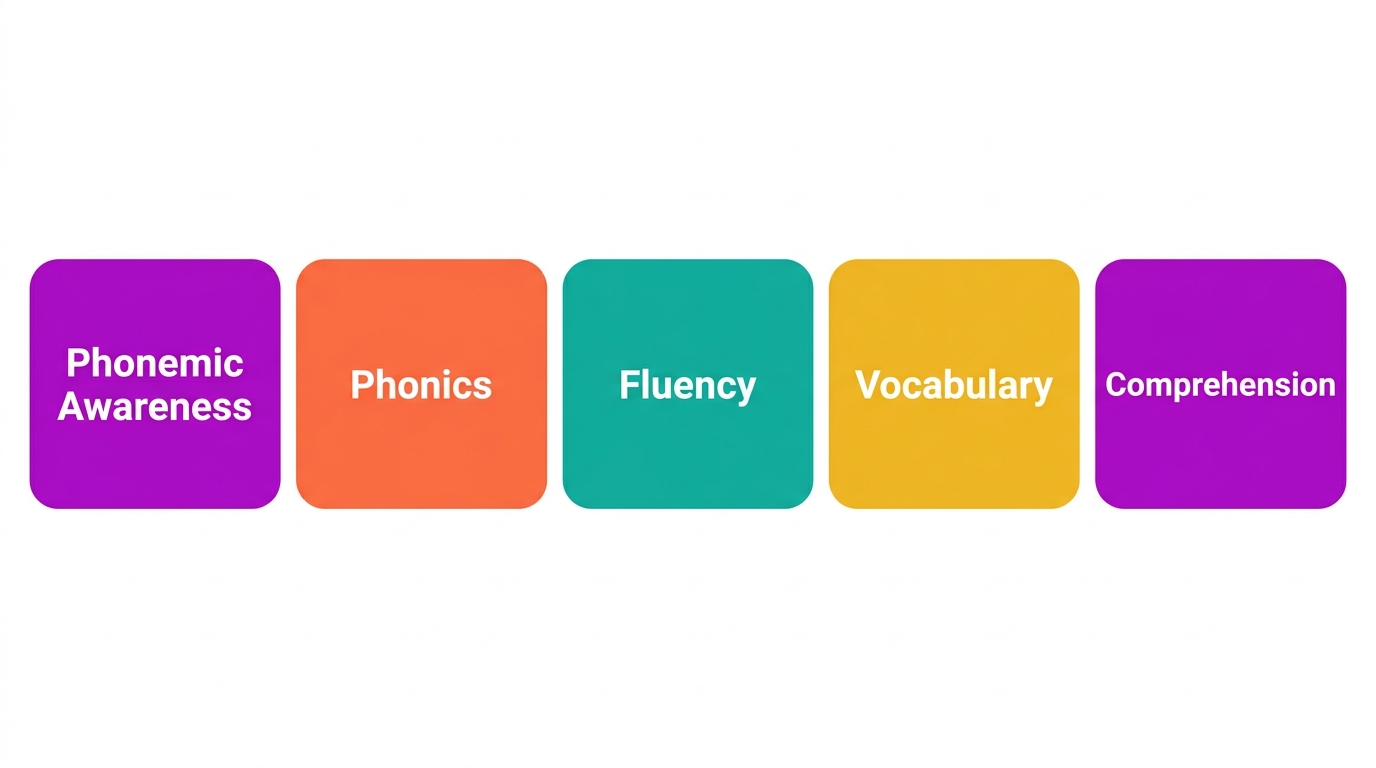
Diagram of the Simple View of Reading equation: decoding times language comprehension equals reading comprehension.
The Simple View of Reading: decoding times language comprehension equals reading comprehension.

How to Apply the Science of Reading in Your Classroom

Requires:
Mote Chrome Extension, an explicit phonics scope and sequence, a screening tool

1. Start with the Research, Not a Product

Understand the five pillars and the Simple View of Reading before evaluating any curriculum, so you can judge whether it is aligned.

2. Choose an Explicit, Systematic Scope and Sequence

Adopt phonics materials that teach sound-letter relationships directly and in a deliberate order.

3. Use Screening and Progress Monitoring

Screen students early and track progress so you can give targeted support through an MTSS framework.

4. Develop Both Strands

Build word recognition and language comprehension together with vocabulary, background knowledge, and rich discussion.

5. Add Accessibility Supports

Use tools such as Mote Read Aloud so developing readers can access grade-level content while their decoding skills grow.

Diagram of the five pillars of reading: phonemic awareness, phonics, fluency, vocabulary, comprehension.
The five pillars of reading instruction.

Frequently Asked Questions

Common questions about
Science of Reading

Qu'est-ce que la science de la lecture, en termes simples ?

La science de la lecture est l'ensemble des recherches qui expliquent comment les personnes apprennent à lire et quelles méthodes d'enseignement fonctionnent le mieux. En termes simples, elle montre que la plupart des élèves apprennent à lire de manière plus fiable par un enseignement explicite et systématique des sons, des lettres et du sens.

La science de la lecture est-elle un programme ou un curriculum ?

Non. La science de la lecture n'est pas un programme, un produit ou un curriculum. C'est une base de données probantes issue de décennies de recherche, et de nombreux curriculums peuvent s'y aligner.

Quels sont les cinq piliers de la science de la lecture ?

Les cinq piliers sont la conscience phonémique, la phonétique, la fluidité de lecture, le vocabulaire et la compréhension. Le National Reading Panel a identifié ces éléments comme les composantes centrales d'un enseignement efficace de la lecture.

Qu'est-ce que la Simple Vue de la Lecture ?

La Simple Vue de la Lecture stipule que la compréhension de la lecture est le produit du décodage et de la compréhension du langage. Les deux sont requis : un élève doit lire les mots avec précision et comprendre la langue pour comprendre un texte.

Comment la science de la lecture diffère-t-elle de l'alphabétisation équilibrée ?

La science de la lecture préconise un enseignement explicite et systématique de la phonétique, tandis que l'alphabétisation équilibrée enseigne souvent la phonétique de manière incidente et encourage à deviner les mots à partir du contexte. De nombreux districts adoptent maintenant un enseignement fondé sur la science de la lecture.

Essayez Mote gratuitement

Aucune carte requise

© Mote Technologies, Inc. 2026. Conçu avec 💜 par notre équipe mondiale.